Building Interprofessional Team Skills for Collaborative Practice
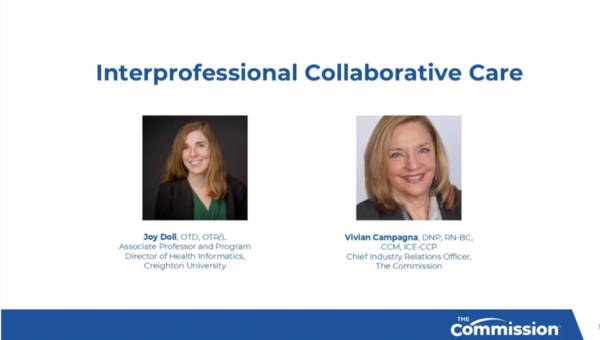
WATCH FOR FREE (NO CE CREDIT OFFERED)
PURCHASE TO WATCH (OFFERS CE CREDIT)
Description:
It is widely known that poor communication between health professionals not only contributes to increased mortality but also increases both length of hospital stays and hospital readmission rates. To achieve optimal patient or client outcomes, different health care professionals need to prioritize collaboration and communication. The World Health Organization has defined interprofessional collaboration as occurring when “multiple health workers from different professional backgrounds work together with patients, families, caregivers, and communities to deliver the highest quality of care (2010)”. It is a partnership that starts with the patient and includes all healthcare providers working together to deliver patient- and family-centric care.
The concept of interprofessional teams is not new. Almost 25 years ago, the Institute of Medicine (IOM) published a seminal report called: “To Err is Human: Building a Safer Health System ”. The report highlights many causes for error in health systems, including poor communication among those who care for patients/clients, and supports the need for healthcare professionals to focus on communication and the facilitation of effective communication. Such communication is learned when health professional students engage in interactive learning with those outside of their professions as a usual part of their education, the goal of which is to build a safer and better patient-centered healthcare system. Interprofessional collaboration takes place when all health professionals are aware of the contributions each profession brings to the team and maintain mutual respect for each other’s professional skill.
Ideally, healthcare professionals will have trained alongside each other so they can fully understand how each expert can contribute to the client’s care. If the health professionals have in fact trained in silos, there is still hope—they can all learn best practices to assist in ideal collaboration. Some experts posit that a well-functioning healthcare team is like an effective sports team . Sacrifices are made for the betterment of the sports’ team, or in health care, for the client. Clear communication helps improve sports’ team functioning as well as client care. In sports, different members have different roles—the same is true in healthcare. But all are essential and it helpful for athletes and healthcare professionals to take their ego out of the equation and focus on the goal—whether it be winning a game or correctly optimizing client care.